This is the first post on my new blog. I’m just getting this new blog going, so stay tuned for more. Subscribe below to get notified when I post new updates.
Rain forest equals RAIN!
If you are reading this maybe you have set your sight on joining an Earthwatch project, make note in the rain forest it rains a LOT! We have been here a couple of days. Arriving fresh faced and eager to take on the challenge. Each morning we dress with our carefully selected gear. We bring layers, water, camera backpack- pull on our knee high boots and head out into the forest. The jungle! Note: it is cold here in the highlands of Ecuador and water resistant does not mean water proof!
Our team heads out into the forest to finish collecting data for our Piper kelleyi survey. We hiked up and and down the trails, going deeper and deeper into the dense brush. Walking on top of the layers of leaf litter feels like walking on a trap door each step precarious just waiting for the earth below our feet to fall open.
Boots get stuck, faces scratched, we trip and fall and laugh and look. We take in the gloriously intricate world of plants, trees, vines and fungus. The team is working hard to complete the mission. Data collection is a meticulous and challenging task. It takes commitment and a ton of physical energy. Seeing the never ending joy reflected in the face of Dani and Santiago spark the energy to keep going. One more step, reach for another leaf and find a caterpillar. 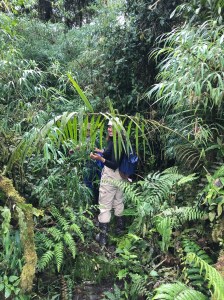 Participating in this research project has given me the exposure to science that brings my curriculum to life.
Day 7 – Saying Goodbye
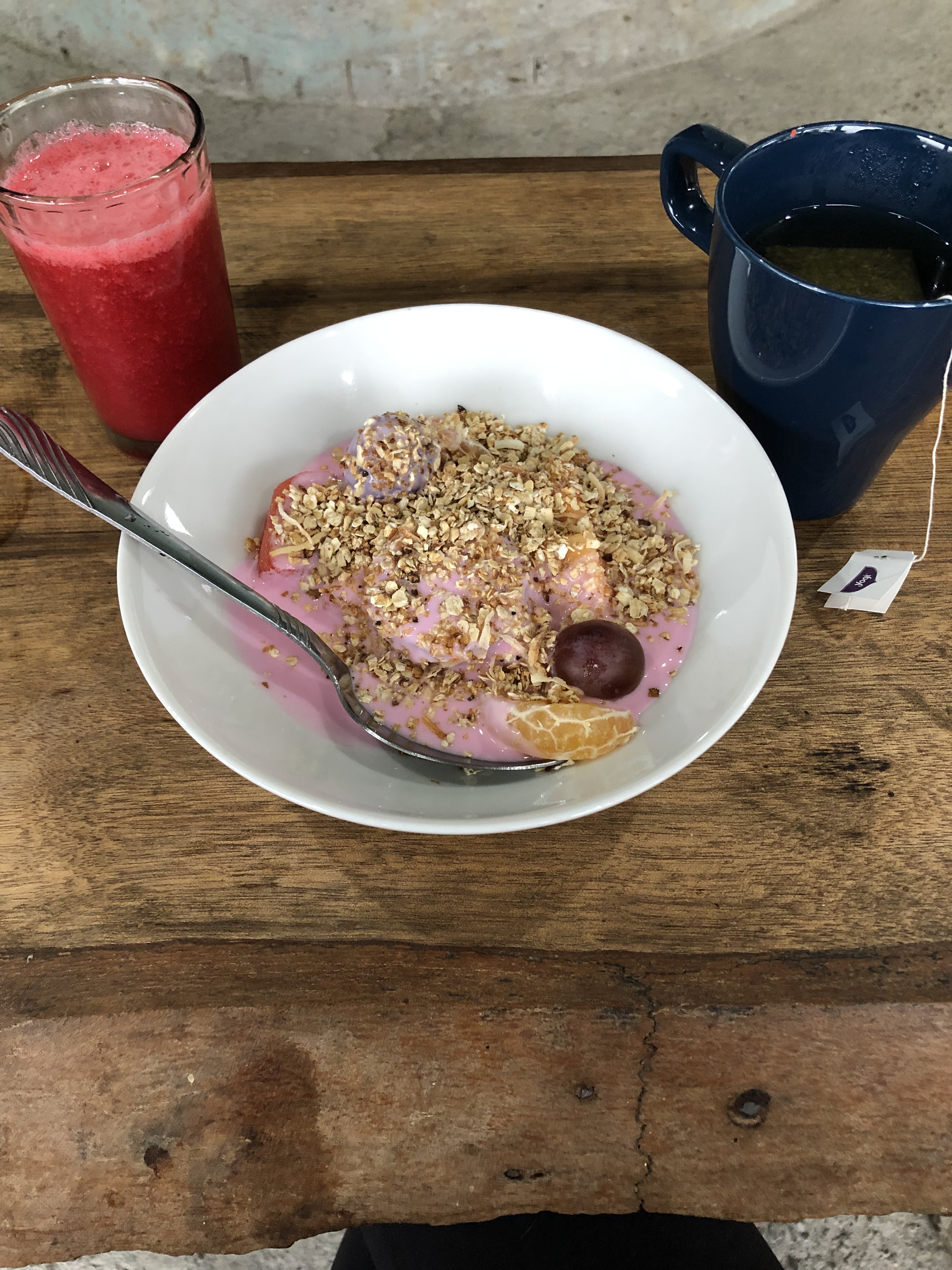
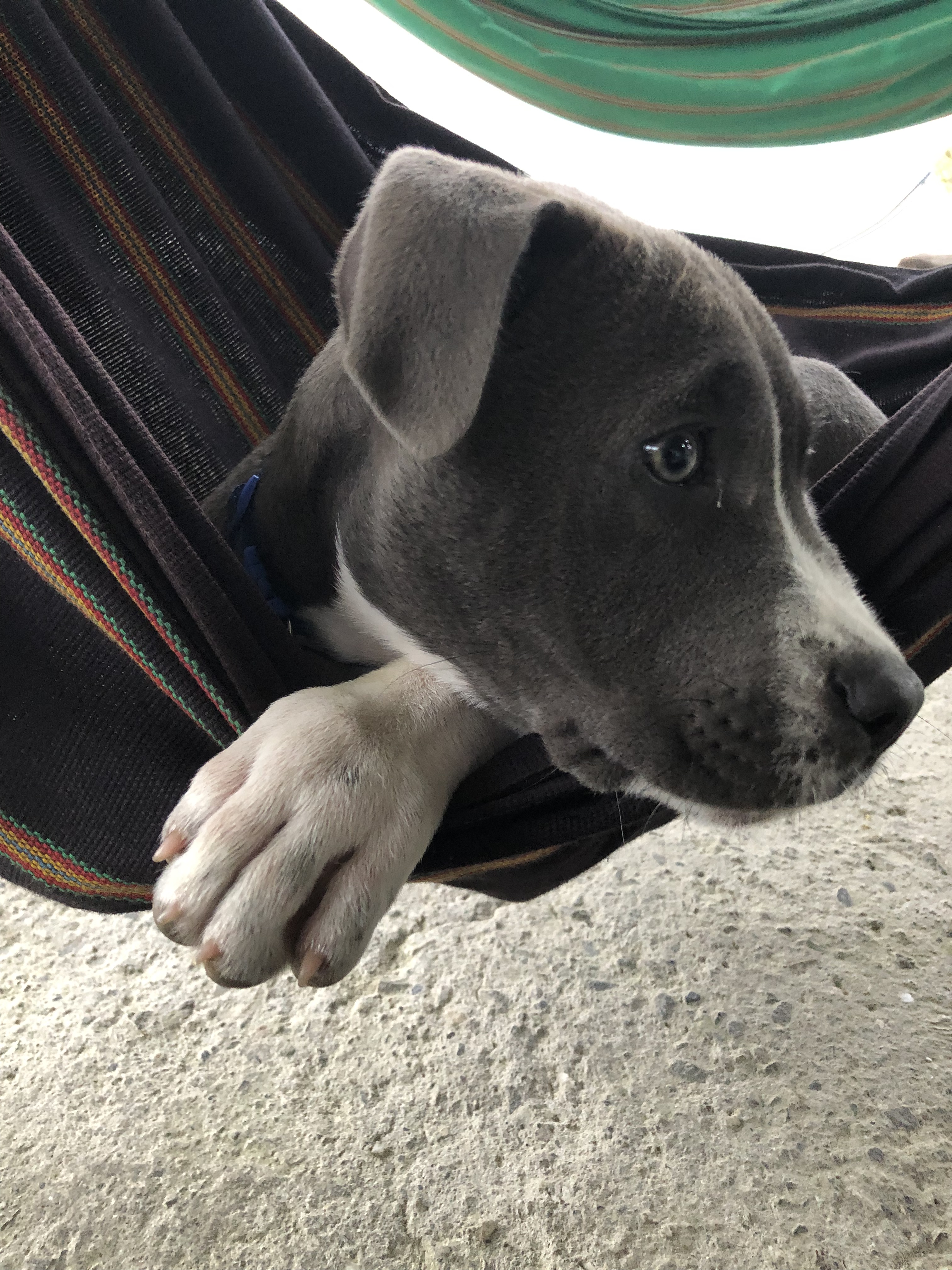
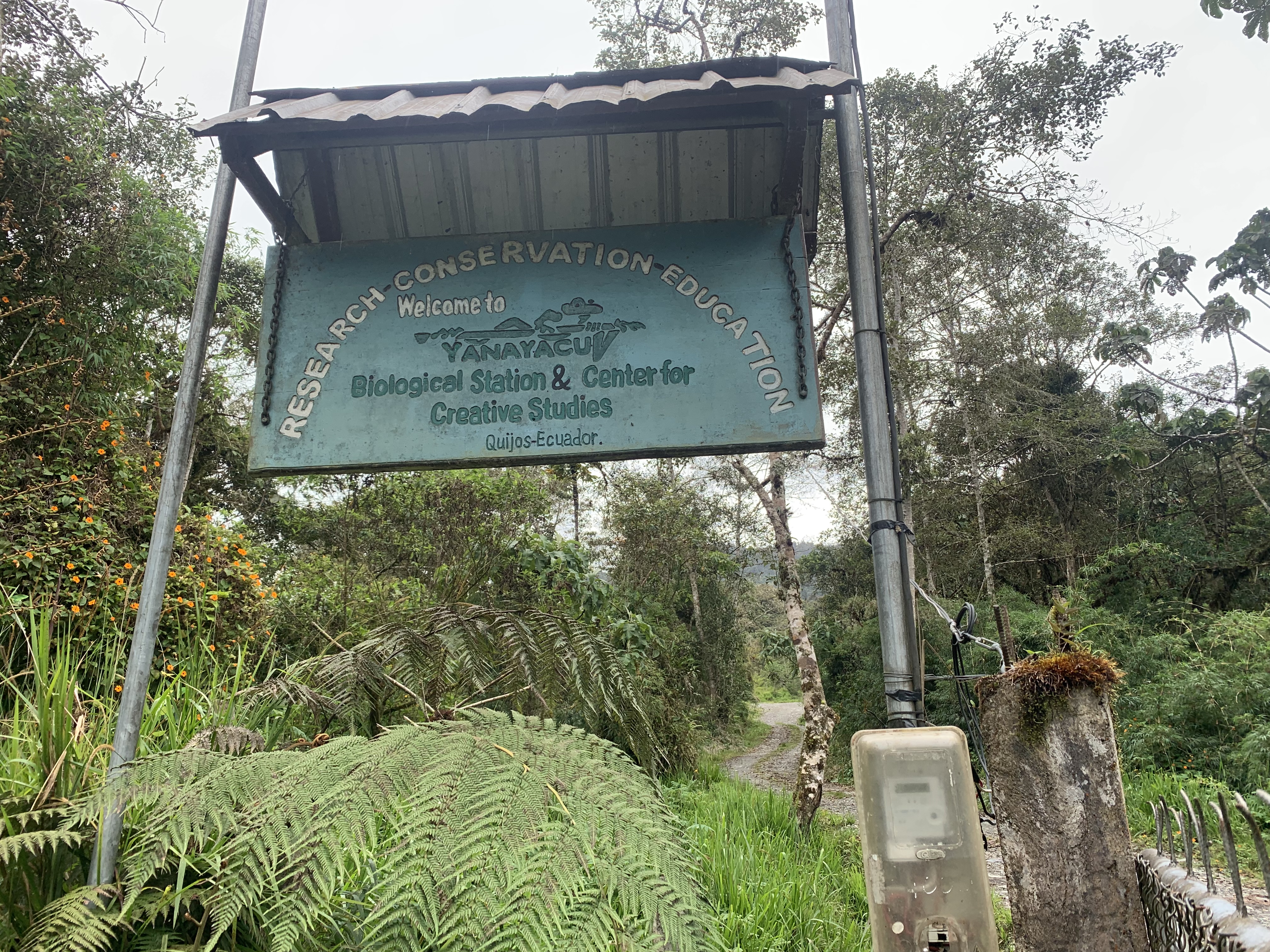
Today was bittersweet. After finishing up another delish breakfast, we had to say goodbye to our Yanayacu family. Special shout out to Jose for the hospitality, Wilmer for his amazing insect knowledge, and Maria with the rest of the staff for yummy food! And of course, we all had to say goodbye to Spike – our mascot for the week🐶
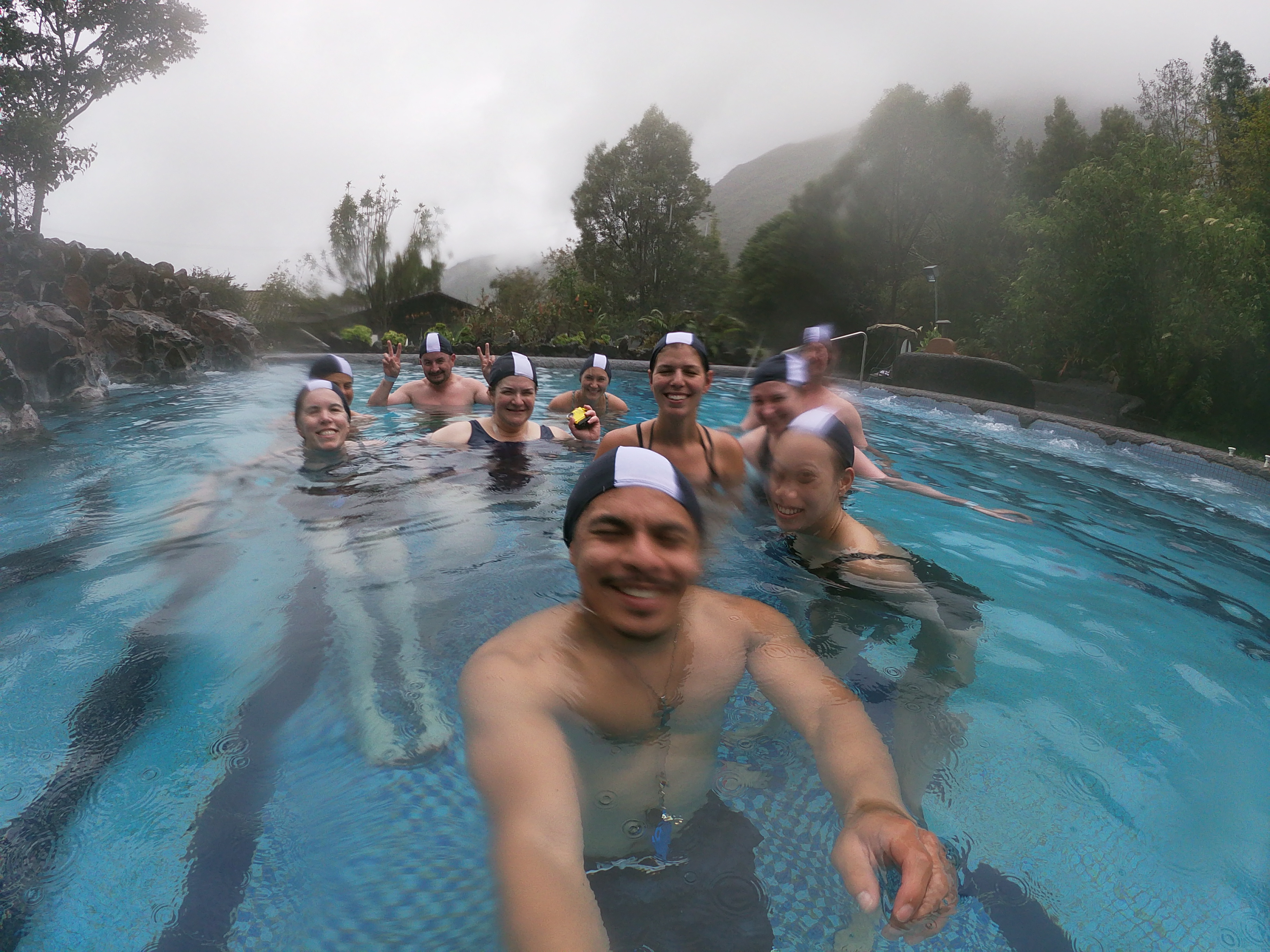
After loading the bus, we heading back towards Quito. Landslides and unseasonal rain did not prevent us as we made a well deserved and relaxing stop at Termas de Pallacta, some amazing hot spring spa. Everyone enjoyed warming up in the many pools and even got some extra relaxation with massages. This pit stop was the perfect way to top of a very memorable week!
Relaxed and ready to hit the road, we once again loaded the bus and headed to our final destination, where it all started, Samay Glamping. It was then time for more good byes. Santi left first, and the rest of us had to say our good byes after dinner. While it’s sad to see this experience come to an end, I am very excited to see what we all do back in our communities and school! Plus, I have a good feeling many of us will see each other gain soon. ✌️
Day 6: Travels and Morning Hike for Birdwatching
 This morning we woke up early to do a hike on part of the Yanayacu property to look for wildlife and birds and check out part of the beautiful terrain. We once again pulled on our big rubber boots for what would most certainly be a muddy hike after a night of rain. The morning brought us good weather though, albeit cool which was good for the long uphill route we would follow.
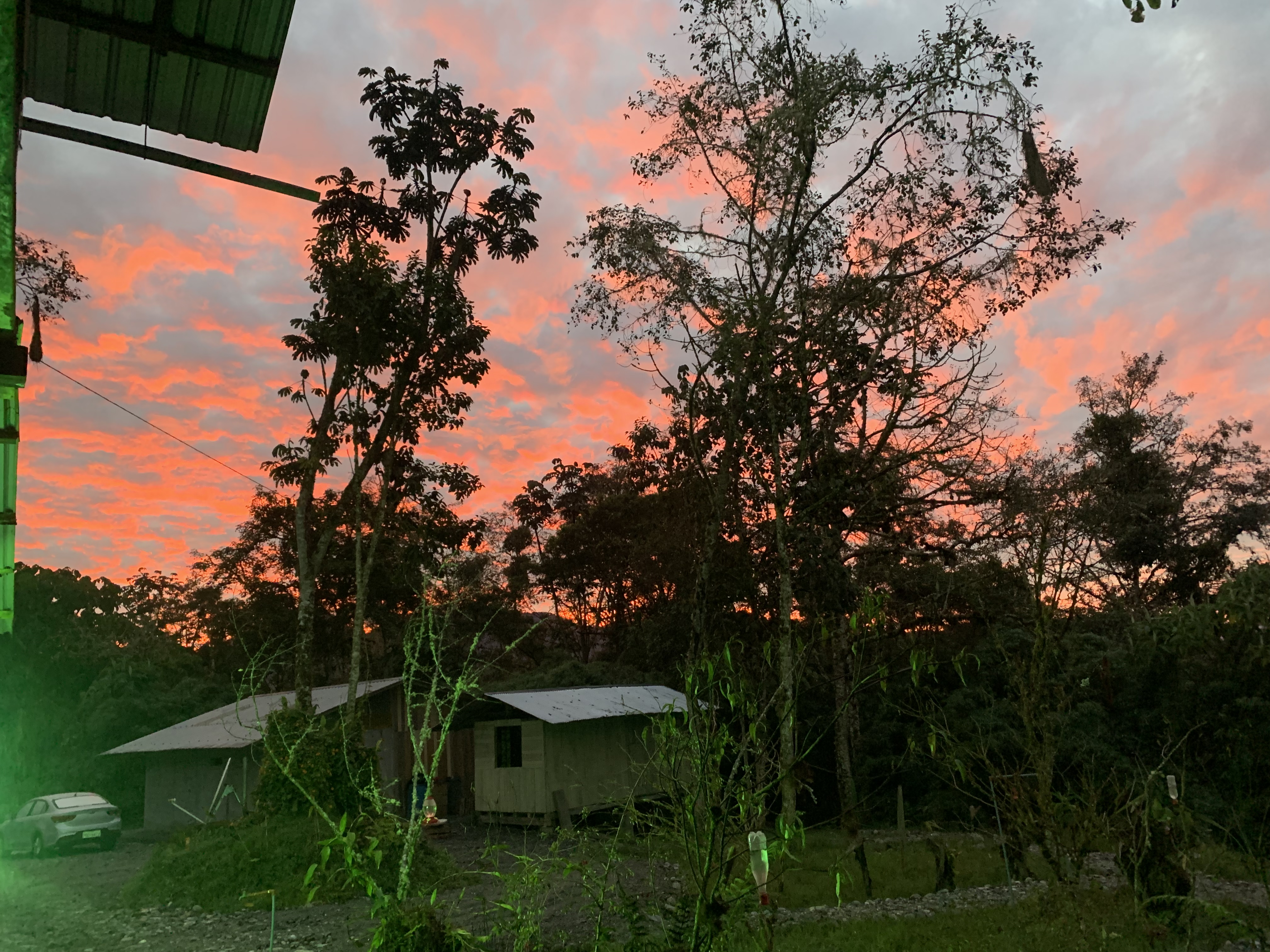
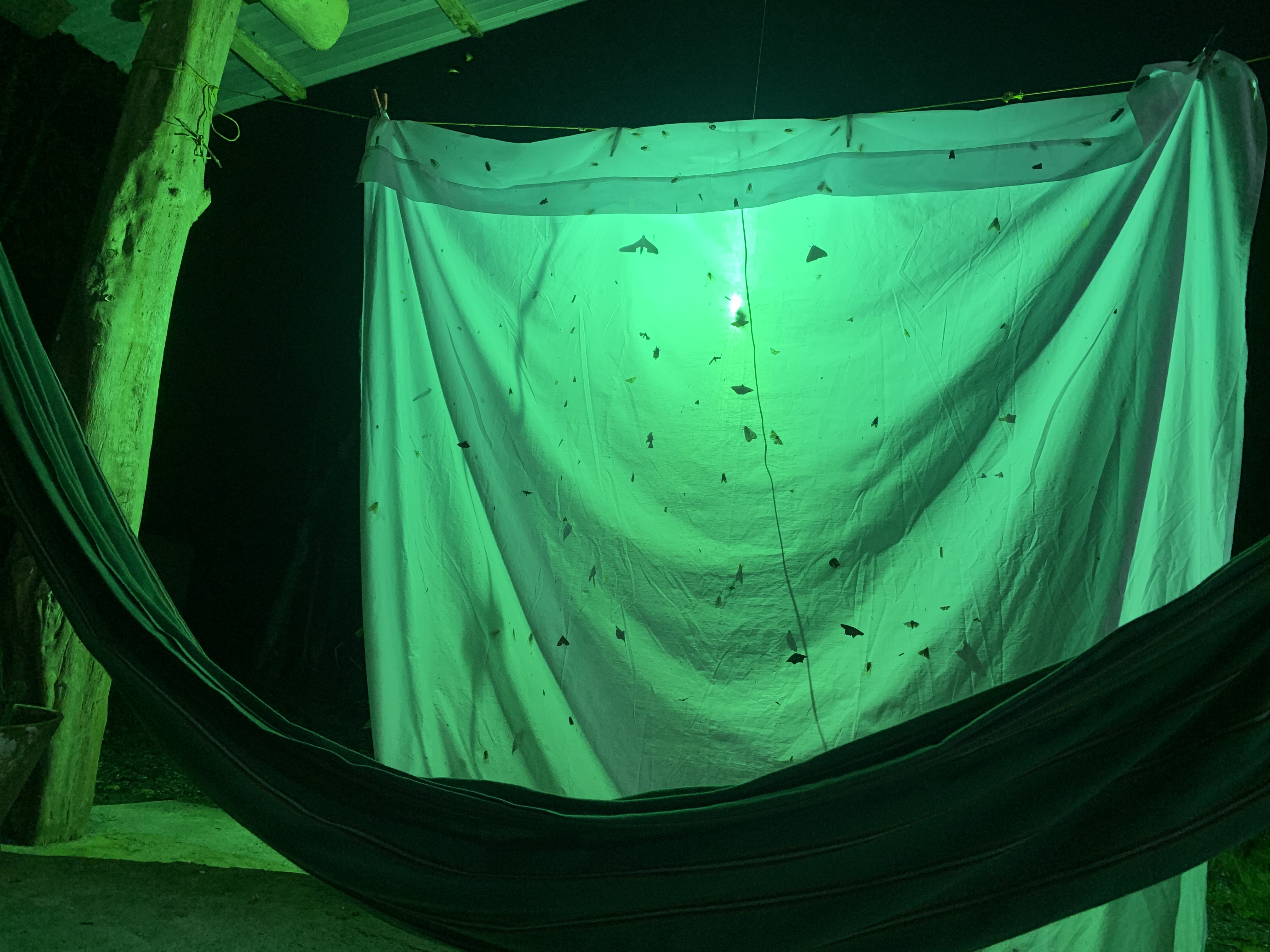
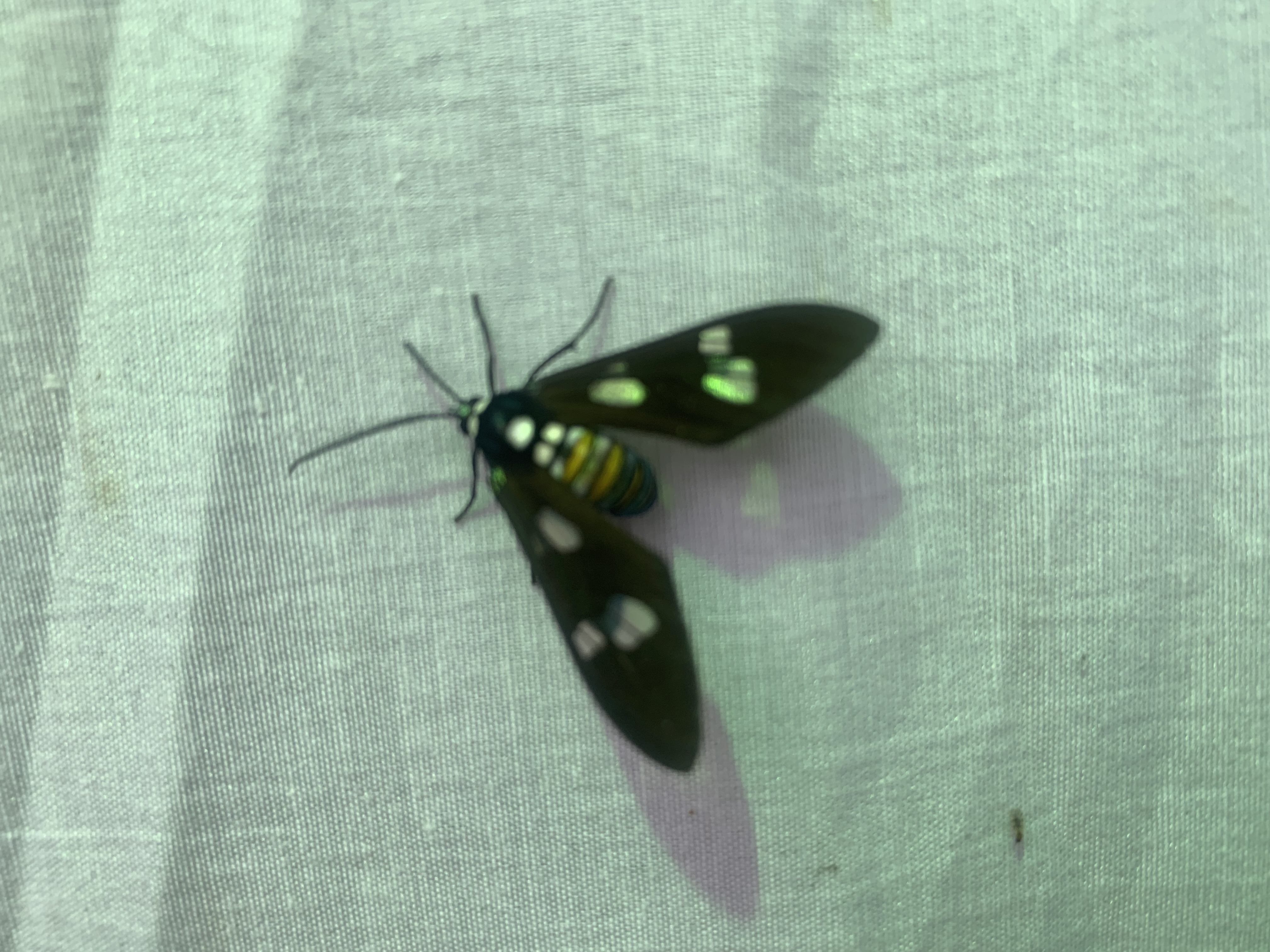
Our usual eating location proved to provide some good early bird sightings of birds coming in to check out the UV light sheet that would be covered with what seemed like hundreds of moths and beetles of all shapes, sizes, and colors.
The hike started out seeming relatively easy as the start of the trail was well-established and rock covered. Before long, though, the trail turned to boot sucking mud.
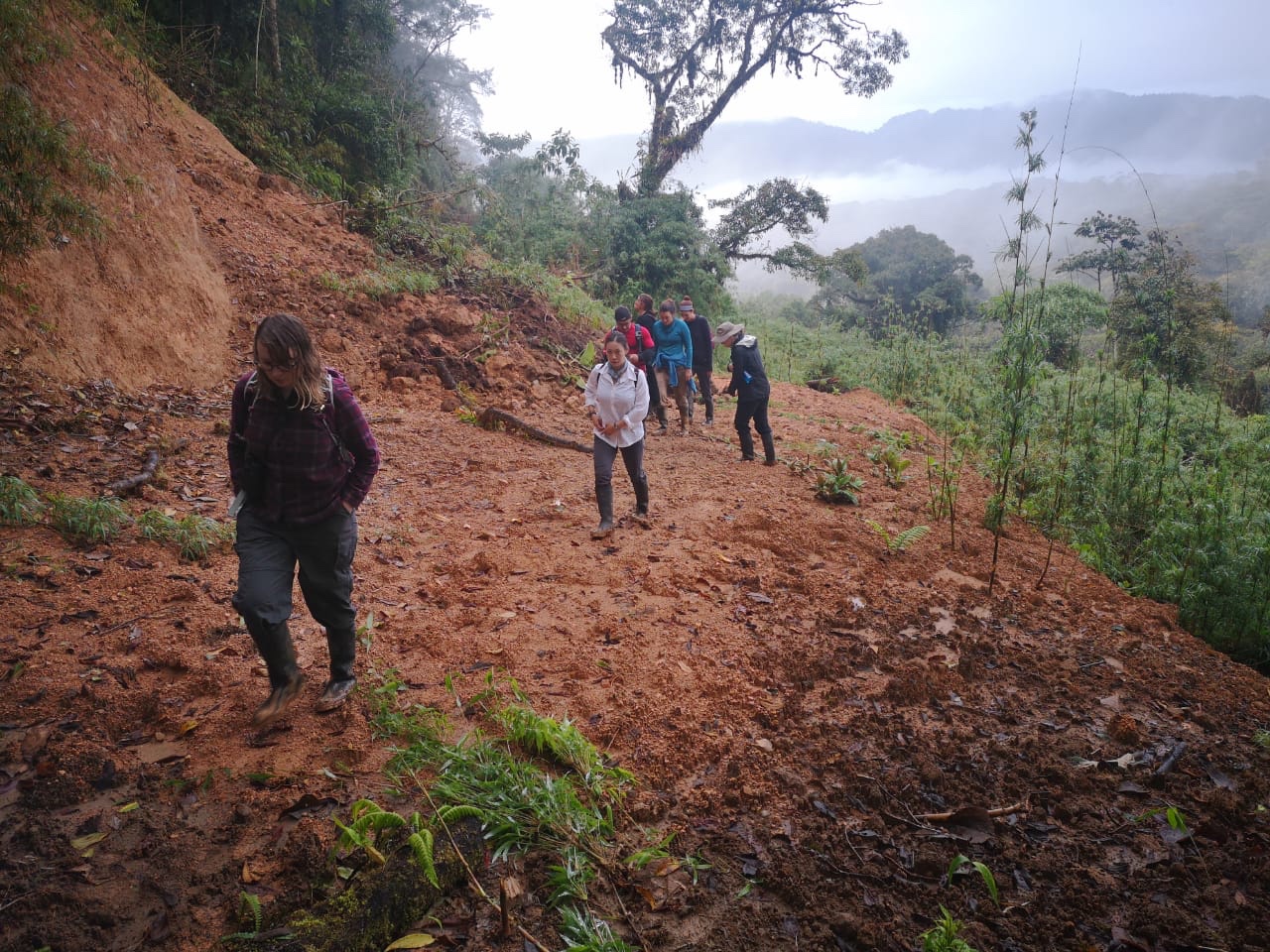
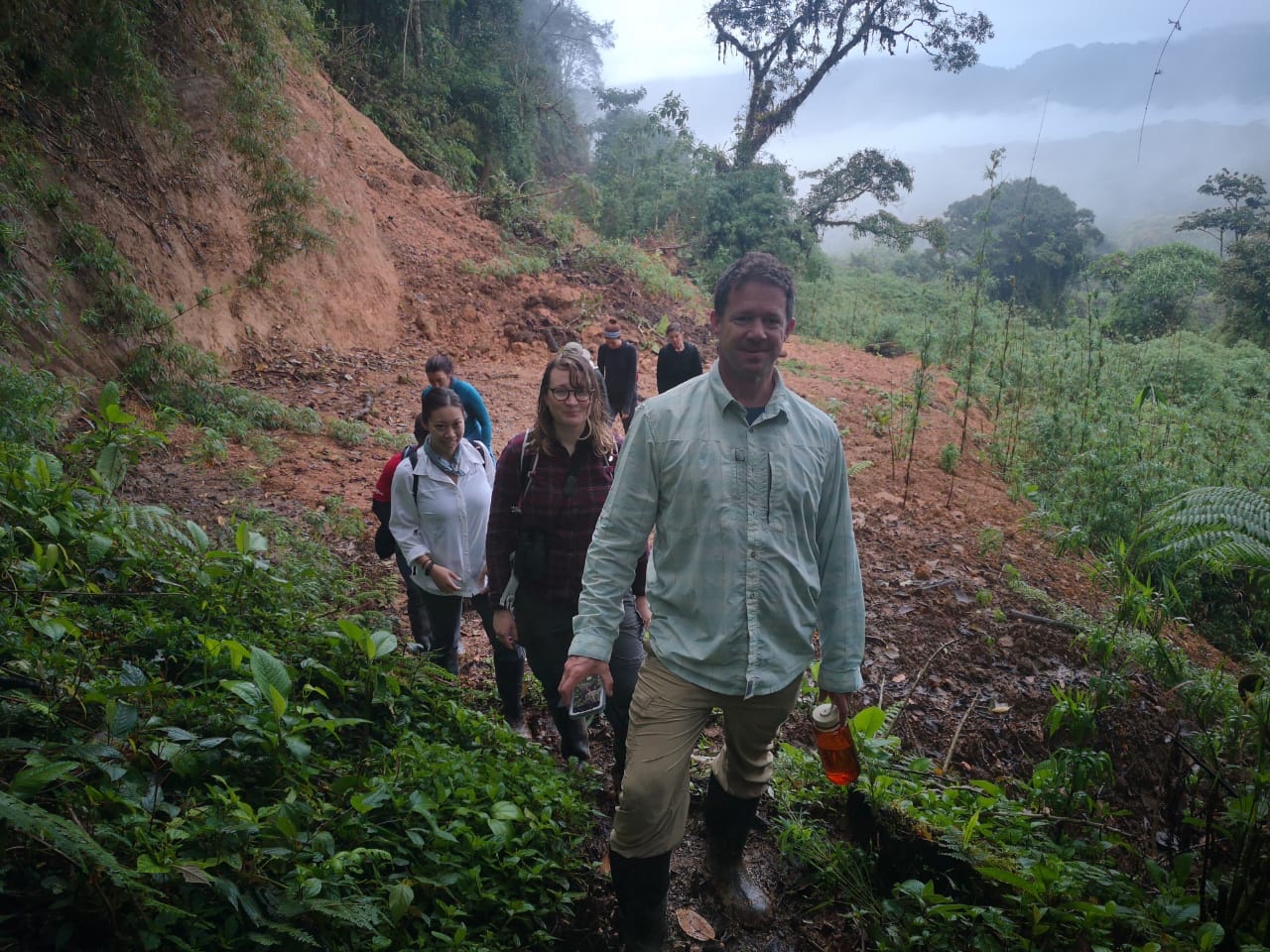
We didn’t see many birds but had a great time slogging through mud, then steep downhills along the Ridge Trail.
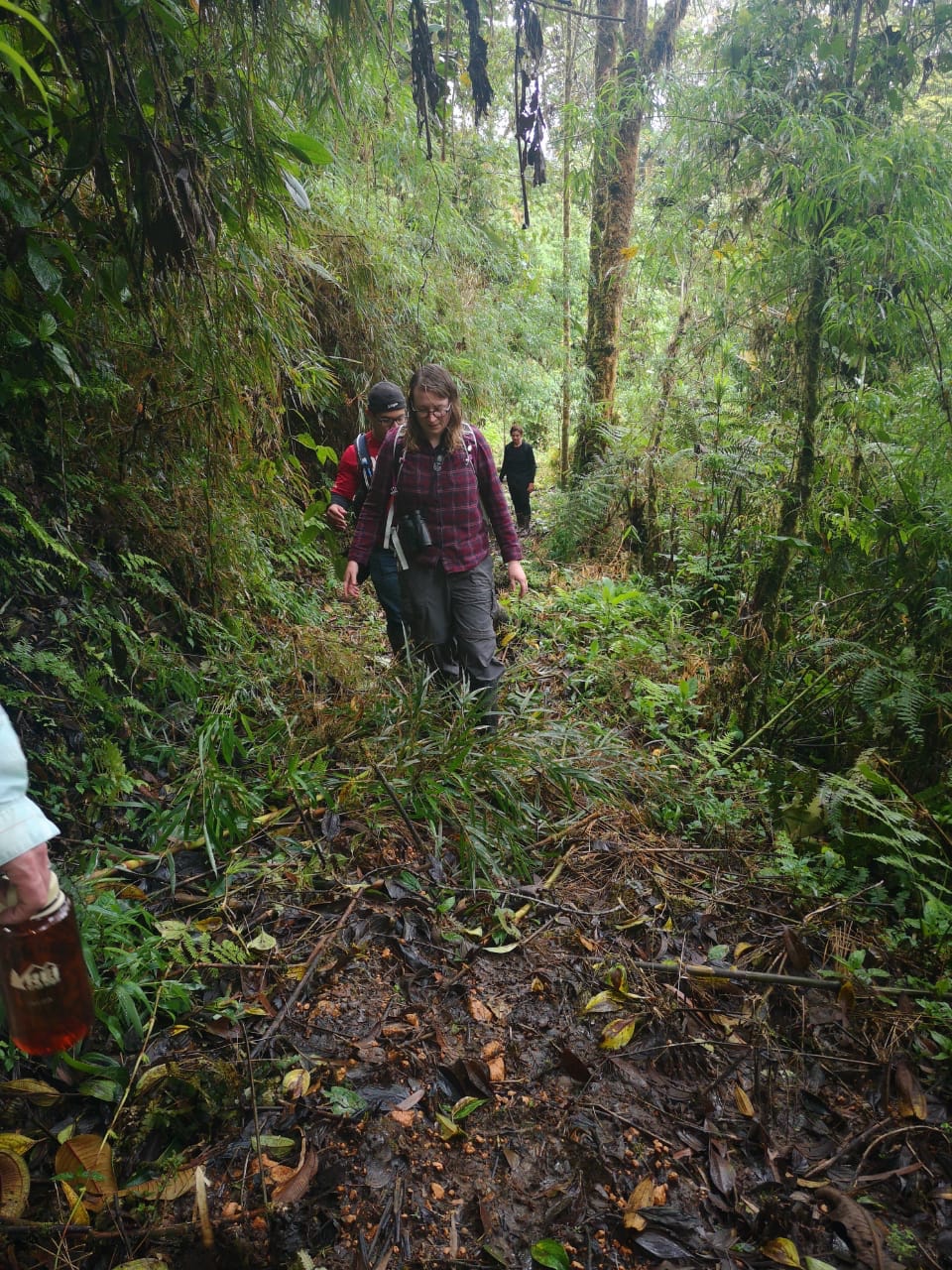
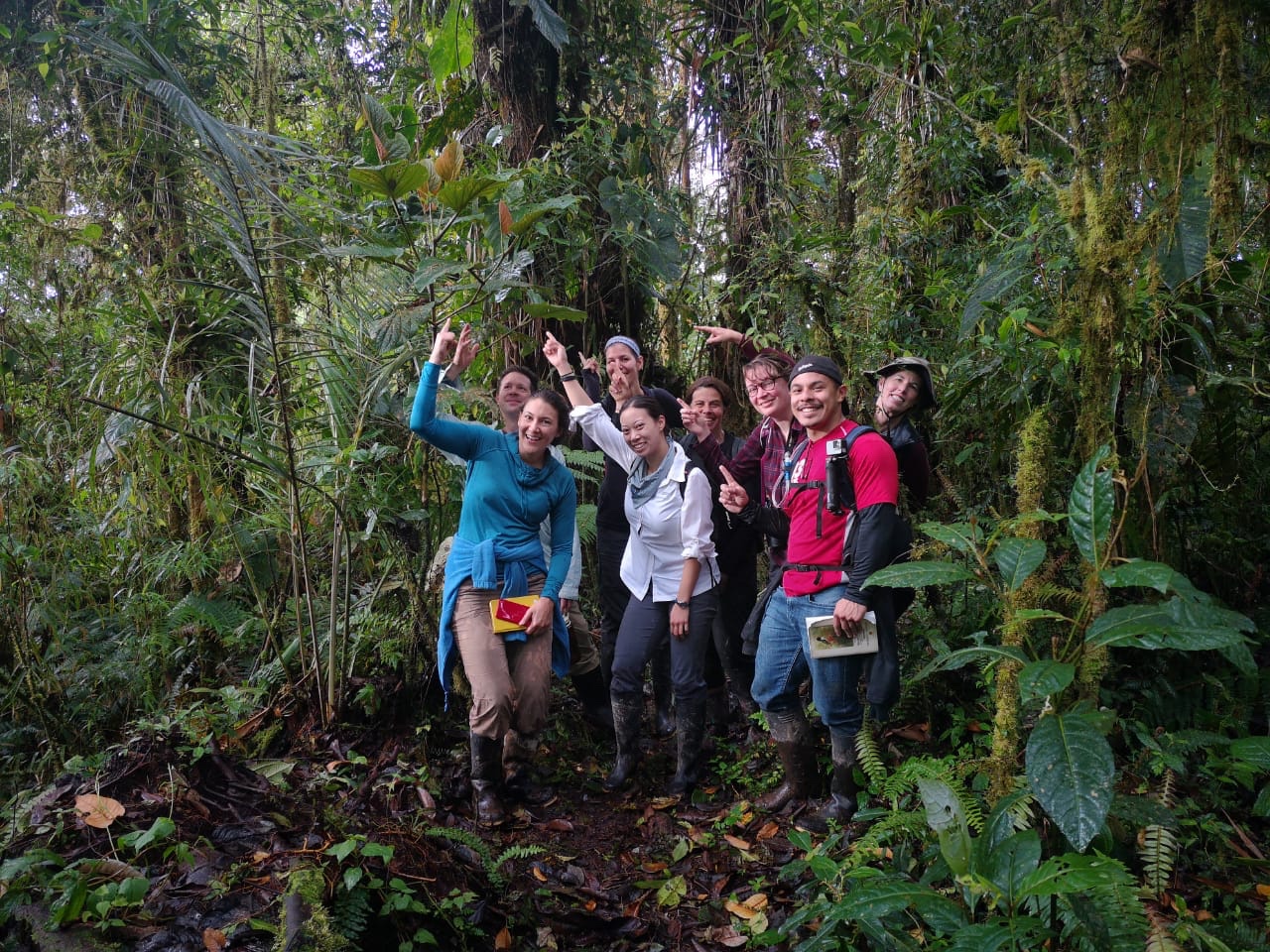
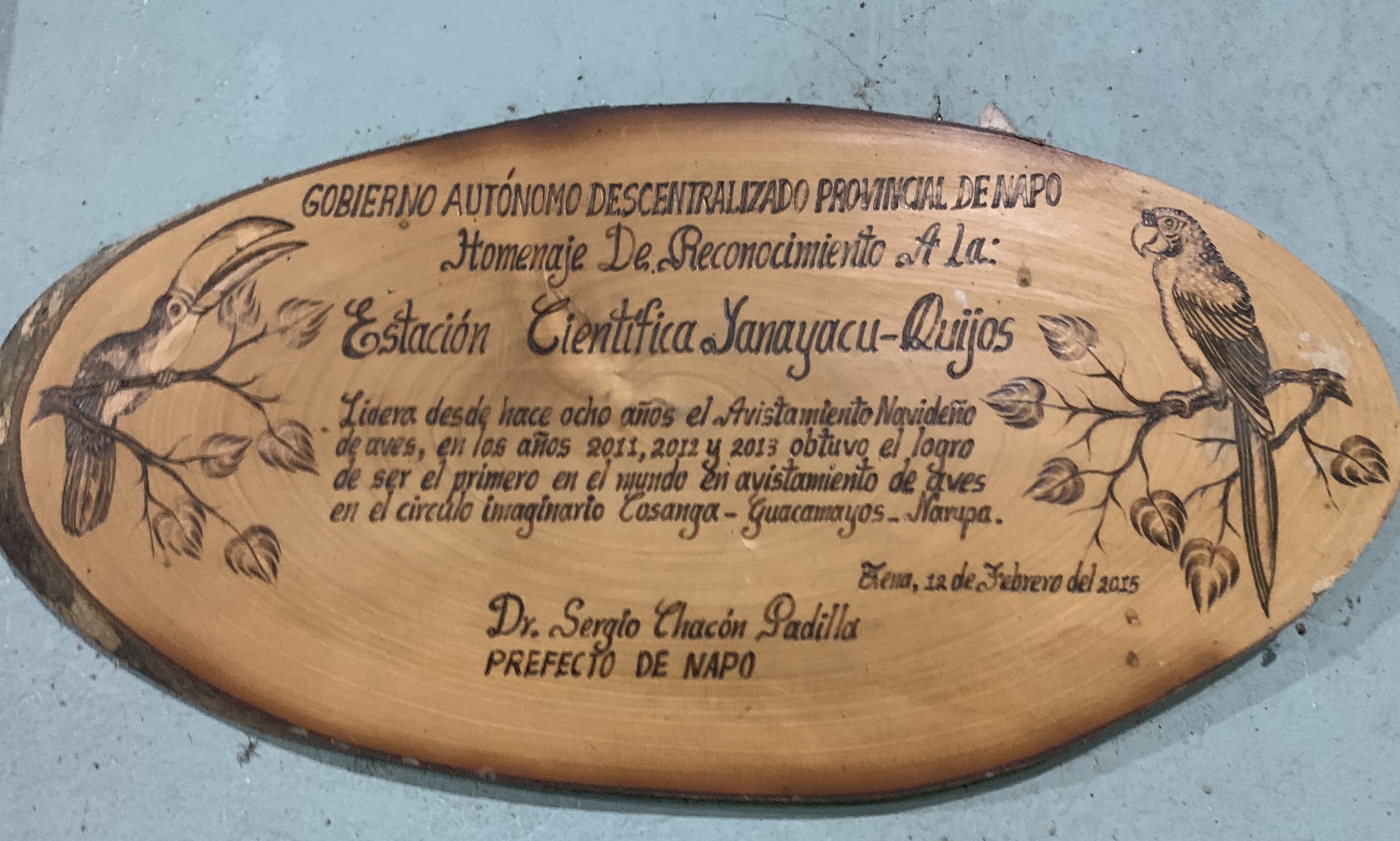
Upon return the Yanayacu we were greeted with another fine meal with lots of fresh fruit, watermelon juice, eggs, and pancakes with bananas. We were also greeted with an Earthwatch tradition here of a freshly cut Piper lanceolotum tree where we would do a final leaf and caterpillar count plus collection. Adding to the fun, we all made guesses at the number of leaves and caterpillars we would find. Although there were nearly 1000 leaves, we only found 35 caterpillars.
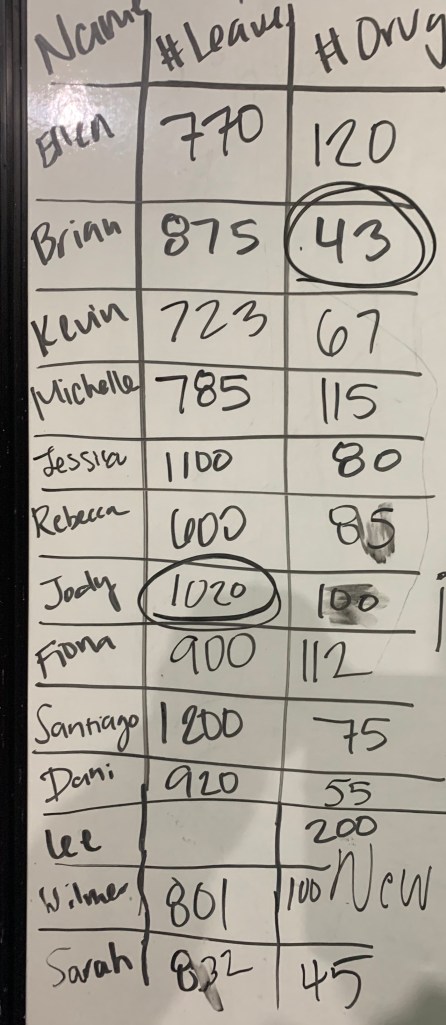
The rest of the day was fairly relaxed with a few presentations and time to wash clothes, shower, pack for our early morning departure back to Quito, and a late night flashlight hike to look for night creatures. We’re all looking forward to the planned stop at Termes de Papallacta (Hot Springs) along the travels back to Quito to soak away a week of mud, bugspray, and who knows what else is clinging to our bodies.
Day 5 – The best laid plans..
So here we are on Day 5 out of 9 and knee-deep in our herbivory research. We started the day ready to tackle the remaining 19 out of 30 sets of Piper kelleyi that we needed to collect data on. After two days of this work, we were all pretty hopeful that getting this done before lunch would be no problem. After breakfast, we all got into the land cruiser and headed to the forest. Once we got out, we saw a caravan of caterpillars! It’s the most amazing thing that they move together like this to travel.
Due to some work being done further down the road, Jim allowed us to go through his home/territory and into the forest. Once we went past the area that had somewhat of a path (thanks to Jim and the cows that used to roam there), the rest of the forest was pretty dense. It’s a good thing that Santiago and Brian are skilled at using a machete! We got a few sets going and were determined to finish our job in a couple hours. There were some times that I just took a moment to look around and was once again reminded at how breathtaking the forest is. It’s such an incredible experience looking all around you and seeing nothing but green.
After about 10 sets, we had to go deeper into the forest to locate more Piper kelleyi. We trudged through some damp and mucky forest floor, ducked under vines, stepped cautiously over branches, and even got our boots stuck in some thick goopy mud a couple times. But alas, we couldn’t find any more of that Piper. We decided to go back for lunch and come back out later and search in a different part of the forest. After waiting.. and waiting.. for our ride to pick us up, we got word that Jose and the truck made its way to Tena! When we thought we were stranded, the very gracious man doing wood work nearby gave us a lift back to Yanayacu. But without a car, and the rain that started, we definitely weren’t going to go back out today. I guess we didn’t get all 30 sets done today…
After lunch, Santiago gave a really informative and interesting lecture on entomofauna. Although he spoke about a variety of things, the most interesting to me was the dung beetle! I learned so much today about the dung beetle that I never knew before. They are great pollinators, and without dung beetles to take care of animal waste, we would be swimming in feces and our atmosphere would be full of methane. Hooray for the dung beetle! In the remainder of the afternoon, we also did more herbivore photography and our 3rd teacher workshop. We started a good brainstorm with a variety of cool ideas for our individual TeachEarth projects.
The night ended with a relaxing dinner and some much needed down time. But before dinner could start, a beetle decided to join us for the meal! This not-so-little-guy fell from the ceiling right onto my shoulder! Guess he just wanted to be my dinner date 🙂 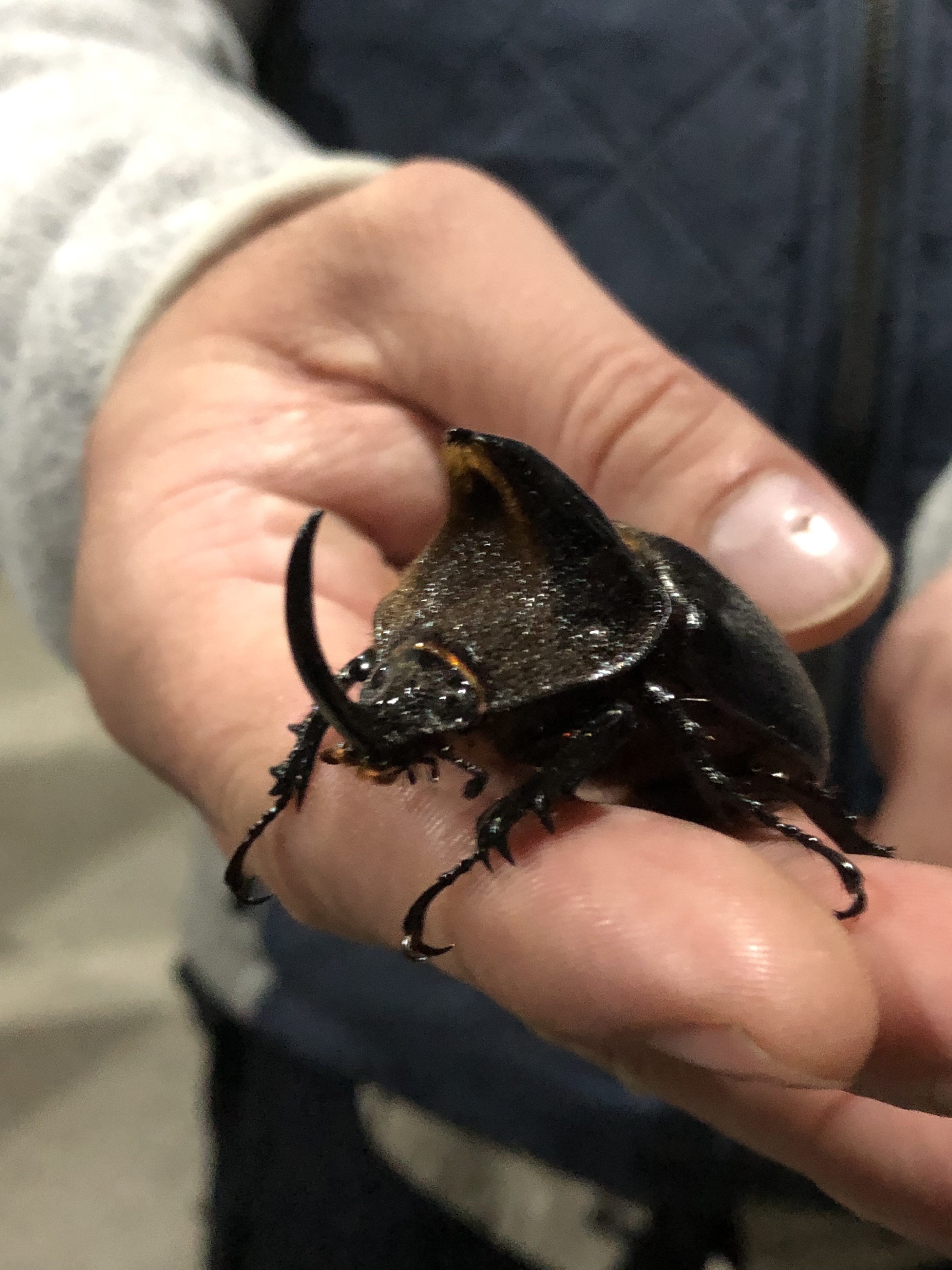
Day 4 – Adventures in the Lowlands
We woke up to a cloudy morning sky in the highlands of yanayacu. We were prompted to meet a little earlier than usual for breakfast because we planned to head out to the lowlands by 7:30am to meet with our PI, Dr. Lee Dyer. Our facilitators Dani and Santiago arranged a taxi to come pick up half of our group that did not fit in the truck in order to ensure the safety of our members during the 2 hour drive.
During our ride we made a quick stop to buy markers to properly label our samples. Meanwhile, the group I was in (truck) took a bathroom break and got a quick look of the city. While waiting for people to come out, Santiago shared with us a common dish in Ecuador. He grabbed a yellow worm-looking beetle larvae that was 2 inches long and 1 inch thick. Santiago has been supporting me through my journey of getting over the fear of grabbing bugs and insects so he asked me to grab it. Without hesitation I grabbed the larvae with two fingers as I felt it’s core contract and stretch. Apparently these beetle larvae are fetched from a palm tree in Ecuador and are grilled to give it a crunchy exterior but mushy interior.
Promptly we arrived to our destination at Iyarina. Dr. Dyer was finishing up his lecture with some undergraduate students from University of Nevada, Reno (UNR) and Colorado Mesa University. We were scheduled to go out searching for a new species of plants called Melastomataceae. Dr. Dyer wanted us to teach 3 of his students the methodology of our research so they rode with us to the Iyarina Reserve. As soon as we walked into the rainforest it was evident that the lowlands were extremely different than the highlands. Due to the 5,000ft+ difference in elevation, we were now experiencing a complete opposite climate at an 80F weather and 90% humidity. The vegetation in this area was definitely unique. Unlike the Piper Kelleyi species plant from the prior day, the Melastomataceae plant was relatively easier to spot. We were able to collect data from about 18 of 30 sets of plants.
Eventually we headed back to the Iyarina Station where we ate lunch. Some of us walked down stairs to eat our lunch near the shore of the river but it started to rain. Once the rain died out and we finished lunch we headed back to the Iyarina Reserve to finish our work. By then it felt so much more humid and most of us were sweating just searching for herbivores at our designated plant. Once we finished some of us took the opportunity to walk 1/8 of a mile to see a small natural pool despite of the rainfall. Santiago decided to use nature to fight nature and cut a couple big leaves to use as an umbrella. We arrived at the the pool and it was so beautiful! We took a group picture with the part of the group that was there.
Eventually Dr. Dyer somehow found us to inform us that we needed to head back to our station in Yanayacu in the highlands soon because officials close roads during storms due to the dangers of mudslides. We had already seen some railing being knocked over from the storm a couple weeks ago so we took no chances and heading back to our station.
When we arrived at our station, we arrived to a small 4th of July U.S. Independence Day celebration set up by the station hosts Jose and Maria. I thought it was a kind gesture given we were in Ecuador. After dinner many of us gathered around the campfire to bond. I shared with a couple of my team members that I was very happy with the level of comfort and unity our group was at. Usually it takes a whole trip to open up to a group and then regret that it didn’t happen sooner. However, I felt our Earthwatch team broke the pattern from my previous experiences because we got close very early in our expedition with love and respect for one another. I am grateful to be where I am right now, to take part in a program that has been very fruitful for me professionally and personally.
Day 3- Variability in Herbivory among Populations of Plants
Today we woke up to a cold morning, but a greatly appreciated warm breakfast from the Yanayacu staff. After breakfast, Dani briefed us on the data that we will collect for the remainder of our Earthwatch fellowship. We piled into a Toyota that looks like it could belong in the movie Jurassic Park to our field site where we would begin the work of collecting data on variability in herbivory among populations of plants. Today the particular plant we measured is Piper kelleyi, a relative of black pepper.
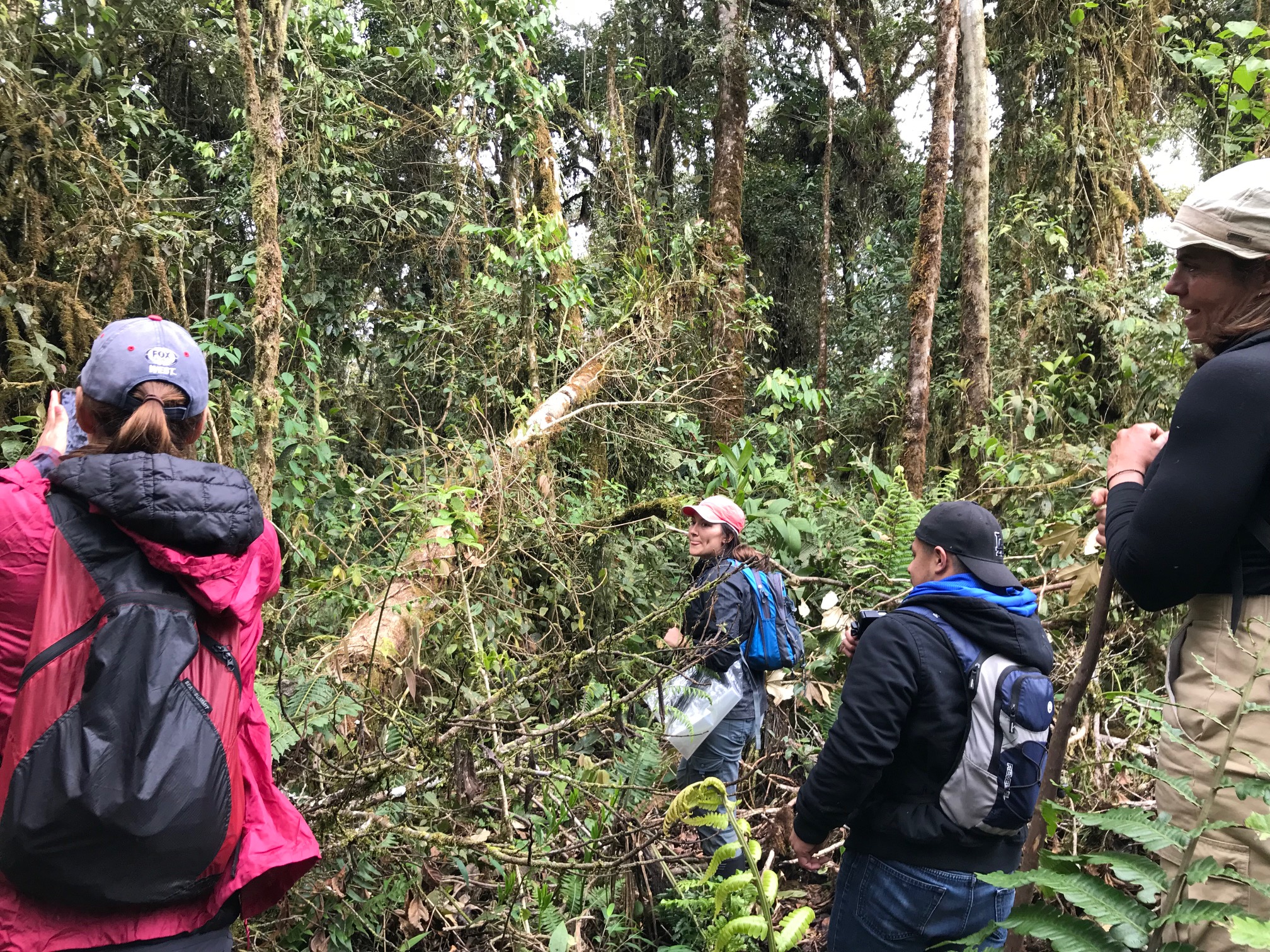
After all the rain that the area has experienced, the forest was wet and muddy, and our boots often sunk through the vegetation as we hunted for our focal trees. Although P. kelleyi is ubiquitous in this area, it’s incredibly difficult for us novice botanists to pick one out from the dense green that surrounds us in the cloud forest. Once Dani pointed out our focal tree, we took turns looking for herbivores on the leaves, finding evidence of chewing and mining, and estimating the percentage of damage to each leaf and overall damage to the tree. We then conducted the same measurements on the next nearest P. kelleyi neighbor to look for variation. It was slow-going, but interesting to notice differences between individuals that grow so near each other.
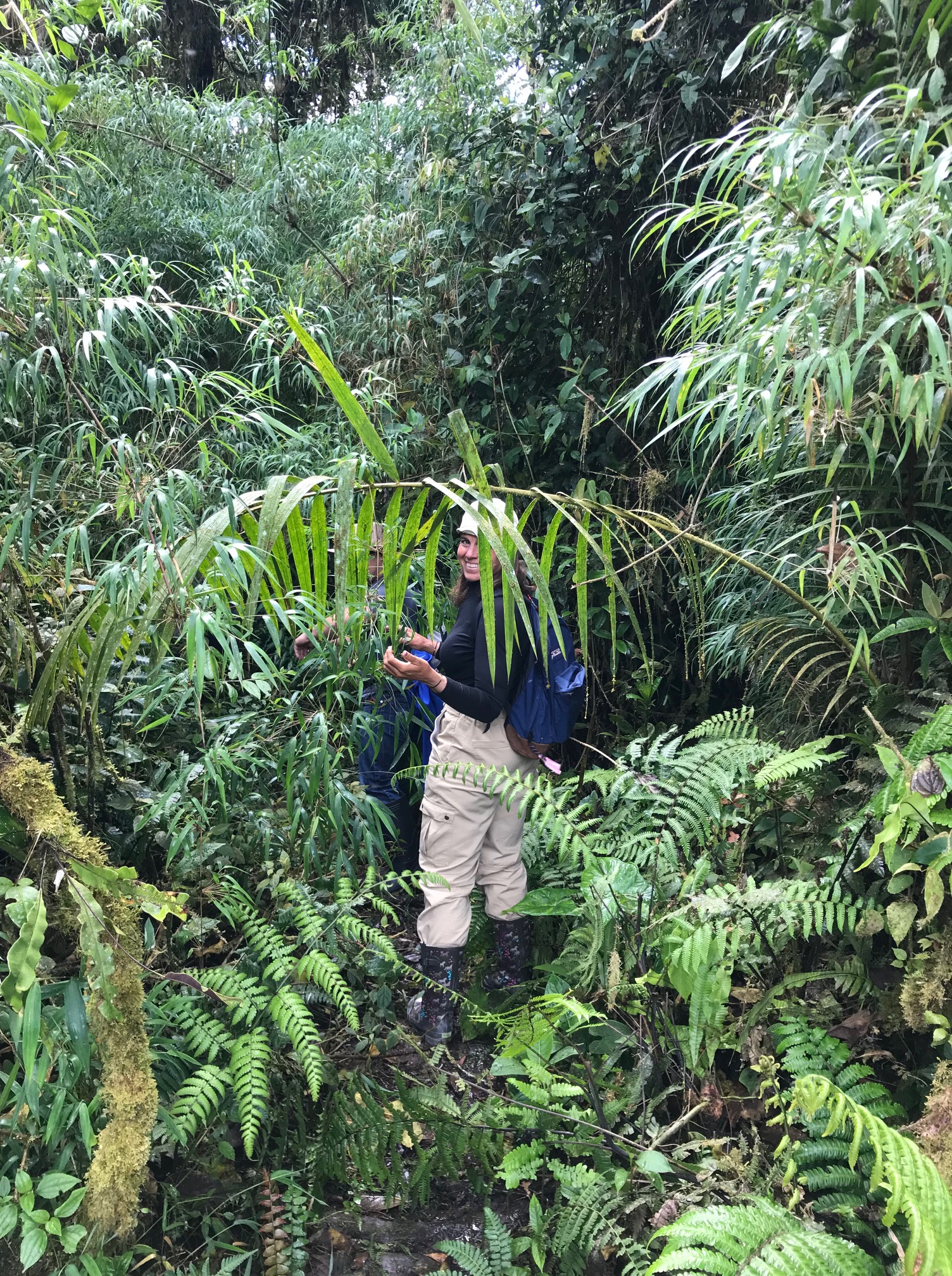
Our second jaunt out to the forest for data collection was noticeably smoother than the first. Now that we know what to look for, it’s possible to collect more data in less time. It began to rain in the afternoon while we were working, but the thick vegetation overhead protected us and gave us a soothing soundtrack to help us along.
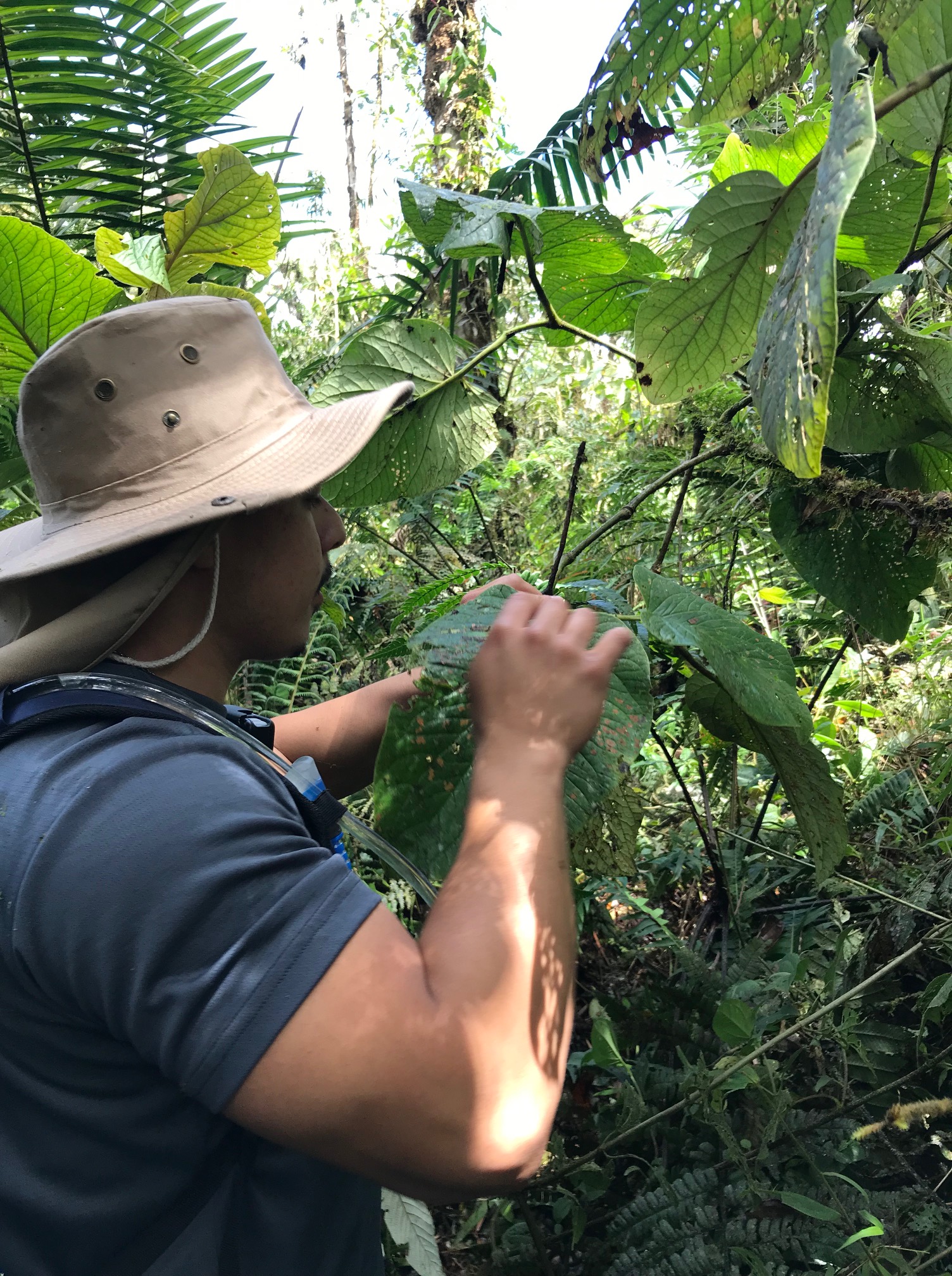
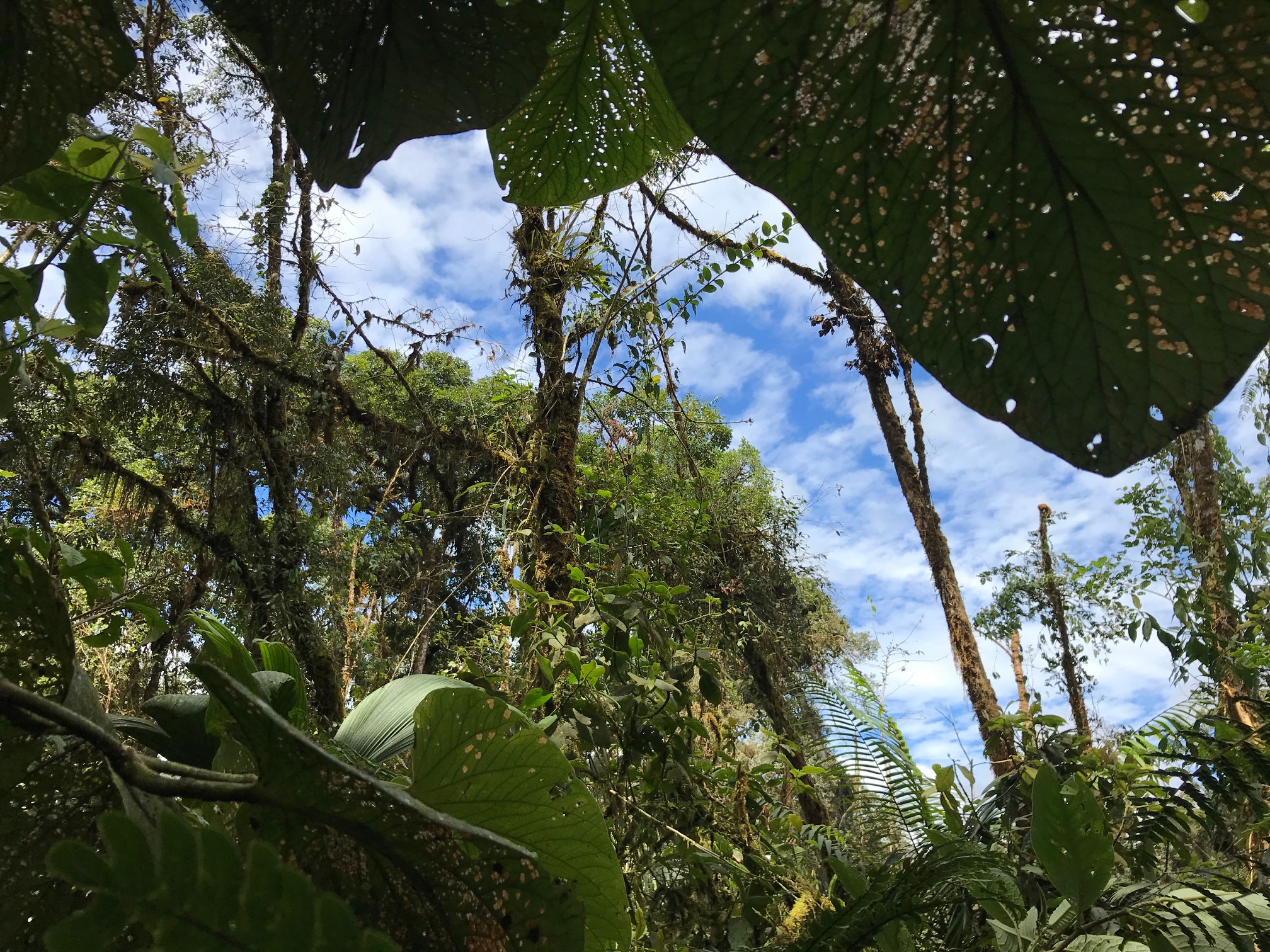
As we walked back to the Toyota, cold, muddy, and happy, Santiago asked how it felt to walk in an area where few other people have been, and it really put into perspective the enormity of this trip and how grateful I am to be a part of this important climate change research.
Day 2
Settling in – July 2, 2019
Our group had an action packed day filled with new experiences, adventures, and learning.
The day began with everyone gathering for a hearty Samay Glamping breakfast. All of the Earthwatch participants made it to the meeting point and breakfast talk was full of excited chatter about our full day ahead of us.
Dani briefed us on our itinerary for the day and Santiago promised to share highlights of the natural features as we drove.
Our first stop was in a small town for rubber boots and miscellaneous supplies and snacks. A second stop for a break had many of us wondering what the interesting snack Santiago has secured. It was cochos and was an unique mixture of beans, popcorn, onions, and tomatoes all in a citrus tomato juice with more citrus on the top. Ceviche without fish? Delicious!
Everyone was happy to see the Guango bridge had been replaced after being washed out recently but the road still had several spots that were partially washed out or covered in water. As promised, along the way Santiago pointed out the different climate zones and their features as we passed through them.
Our driver Luis did a great job safely transporting us all on the rutted roads and we arrived to Yanayacu under sunny skies excited to finally be in the place we’ve all been thinking about so much since being selected about Earthwatch fellows and we all feel fortunate to be here. Jose met our bus and once the luggage unloaded welcomed us officially and gave a brief introduction to the station. We were all given our rooms and a bit of time to settle until lunchtime.
Lunch was abuzz with discussion about our post lunch activities and what was in store for the rest of the afternoon. After lunch, along with Dani, Santiago, and Wilmer, we headed out to the road just outside of Yanayacu. Everyone had collection bags and we began the process of learning to locate caterpillars on their host plants. The weather held for most of the time but seemed to rain just in time for the partial solar eclipse. As participants we all felt successful and everyone was able to bag at least one sample.
We returned to the station and had a bit of time until dinner. Ellen led a workshop for us and just as we were finishing Dr. Dyer arrived. Perfect timing!
After dinner Dr. Dyer delivered a lecture based on the research of his group. He talked about
Day 1
First official meeting!
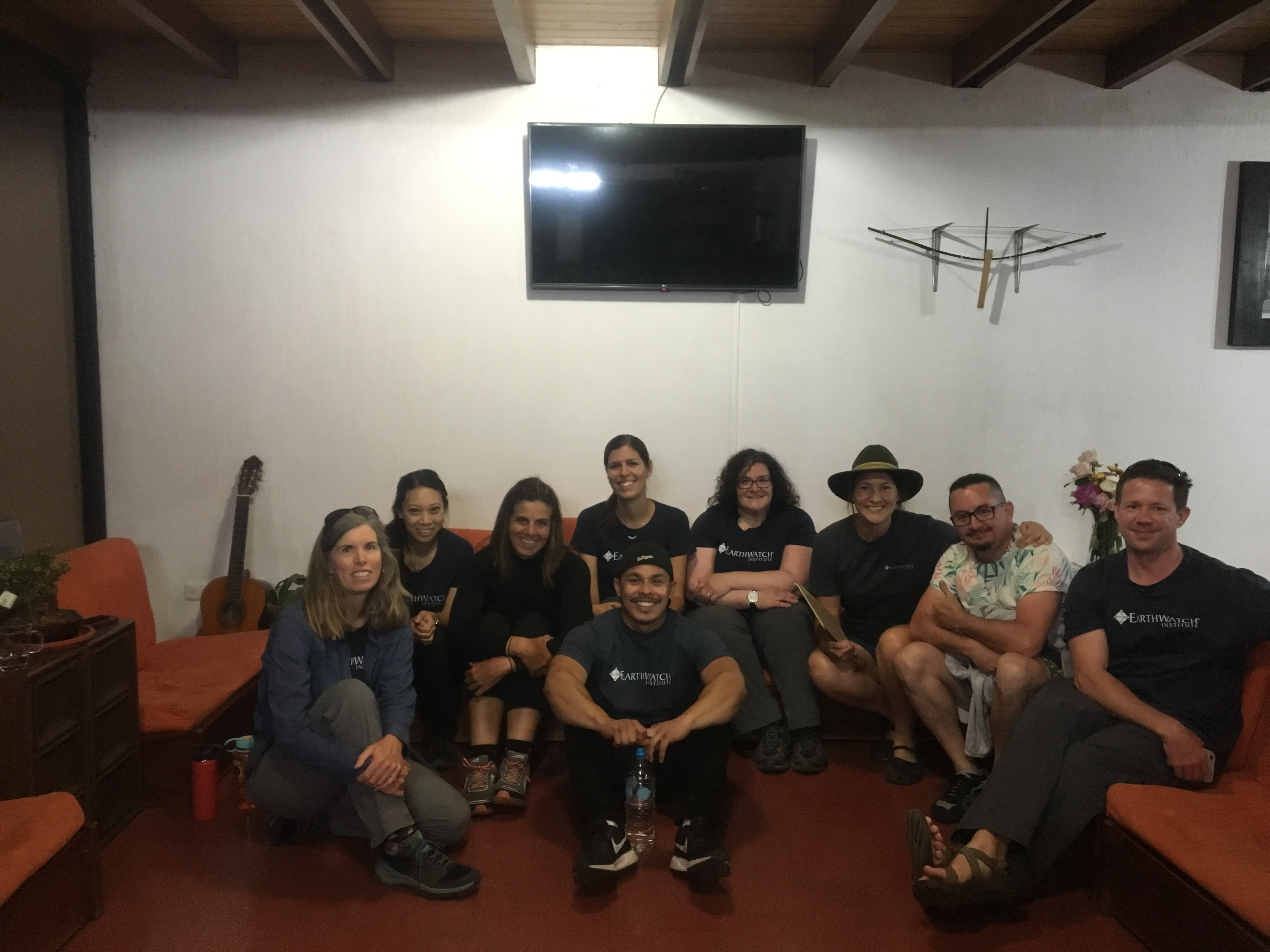
Most of us have gathered last night for our first official meeting with Dani and Santiago from the Yanayacu Research Station. We did a round of introductions and then were briefed on plans for the next week. Santiago taught us a little about Ecuador’s geography and encouraged us to see as much as we can of his beautiful pais. Dani had lots of info on what we can expect this next week and told us her history as a former Earthwatch teacher. Her experience here a few years ago definitely set her life on a new path. After a delicious dinner from our marvelous Samay Glamping hosts, Dani put us right to work as we all pulled out our smartphones and started answering the longest ever (LOL) short survey about ourselves, our interests, our attitudes, and our knowledge. That was the pre-test. We’ll do it again on the last day as a measure of our learning. Dani plans to analyze this information from our group and many others as a part of her grad work.
Introduce Yourself.
Ellen loves reading, teaching, STEAM, and finding connections.
 Climate Change and Caterpillars in Ecuador 2019