Today we woke up to a cold morning, but a greatly appreciated warm breakfast from the Yanayacu staff. After breakfast, Dani briefed us on the data that we will collect for the remainder of our Earthwatch fellowship. We piled into a Toyota that looks like it could belong in the movie Jurassic Park to our field site where we would begin the work of collecting data on variability in herbivory among populations of plants. Today the particular plant we measured is Piper kelleyi, a relative of black pepper.
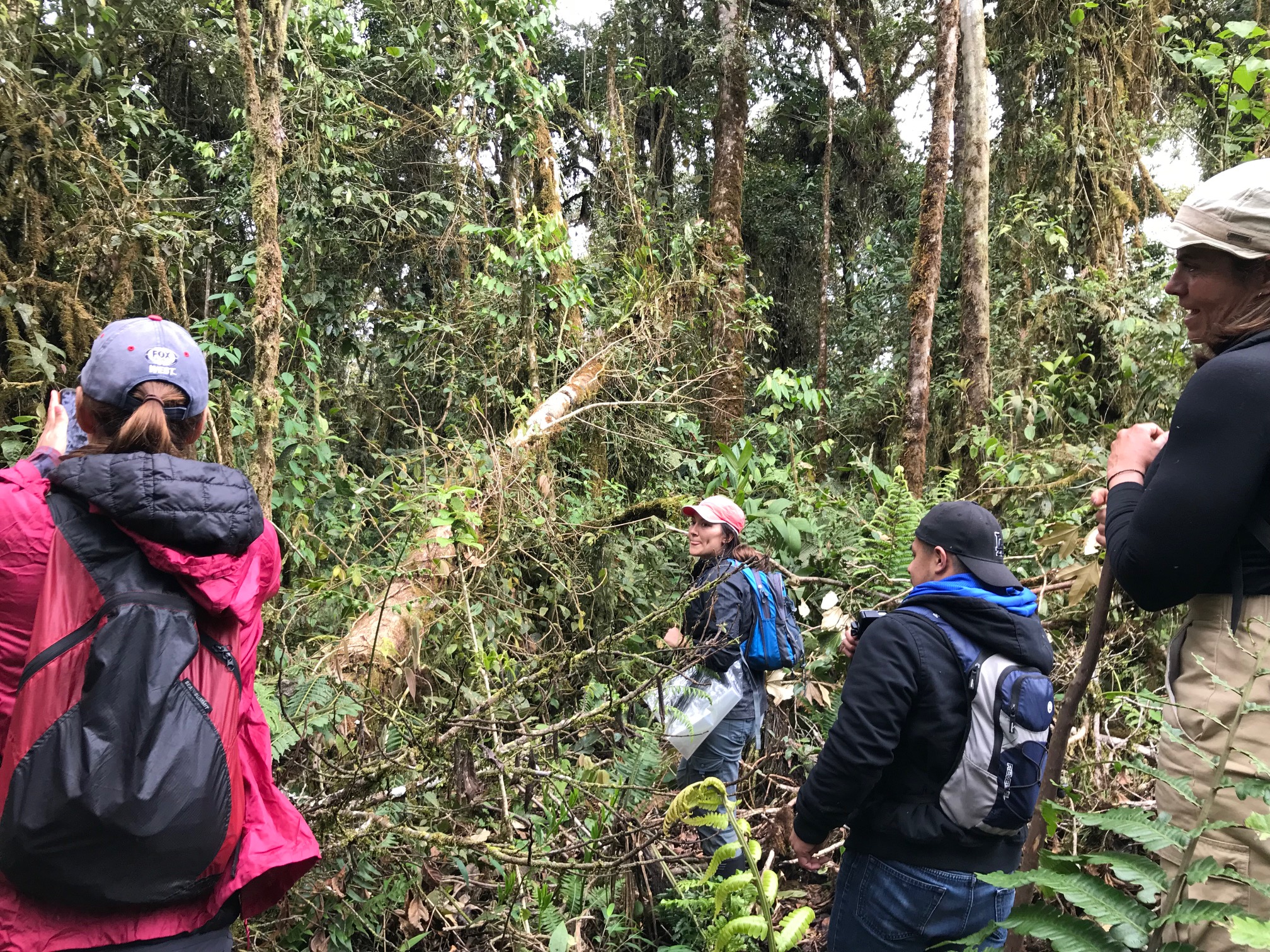
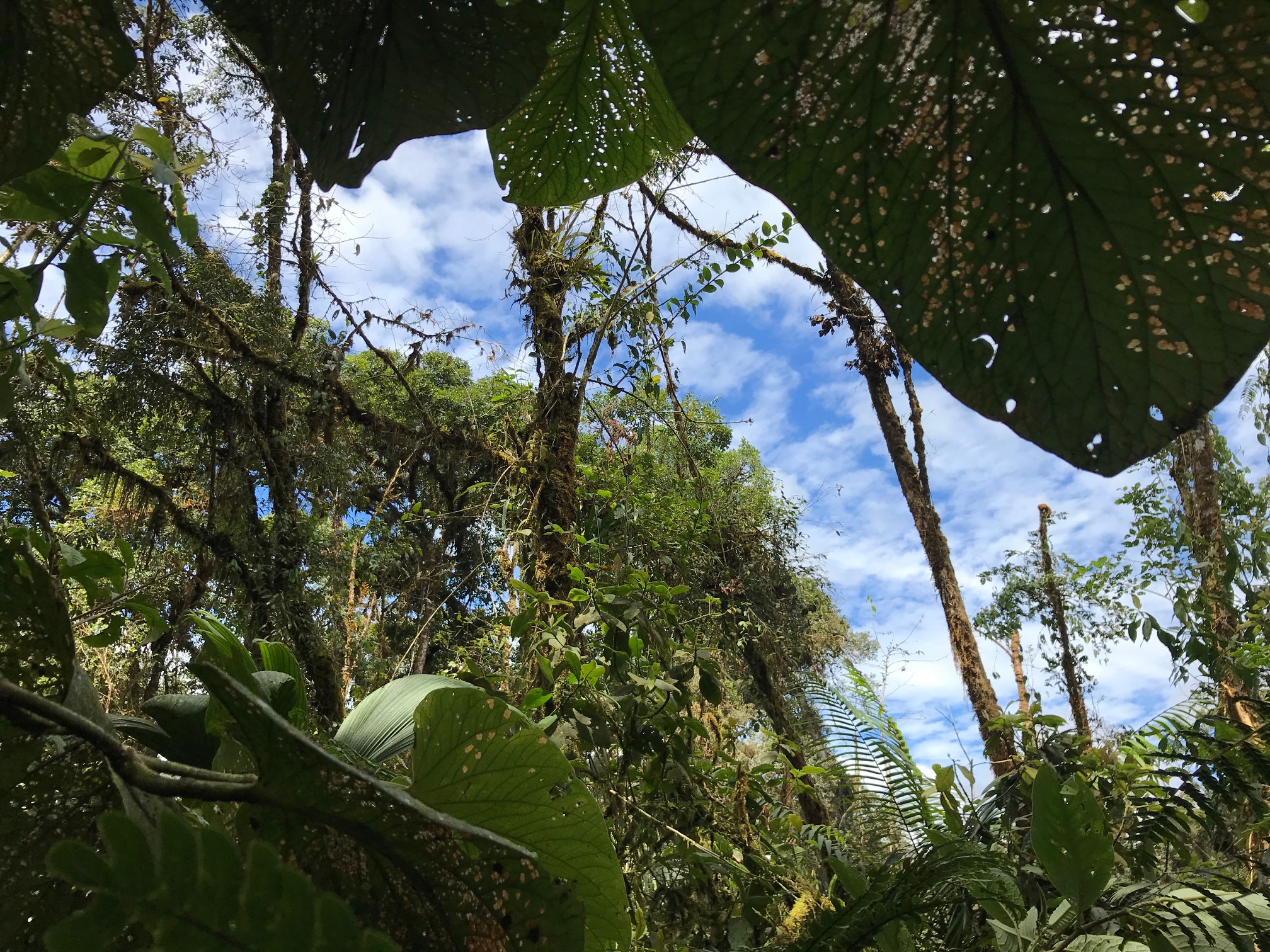
After all the rain that the area has experienced, the forest was wet and muddy, and our boots often sunk through the vegetation as we hunted for our focal trees. Although P. kelleyi is ubiquitous in this area, it’s incredibly difficult for us novice botanists to pick one out from the dense green that surrounds us in the cloud forest. Once Dani pointed out our focal tree, we took turns looking for herbivores on the leaves, finding evidence of chewing and mining, and estimating the percentage of damage to each leaf and overall damage to the tree. We then conducted the same measurements on the next nearest P. kelleyi neighbor to look for variation. It was slow-going, but interesting to notice differences between individuals that grow so near each other.
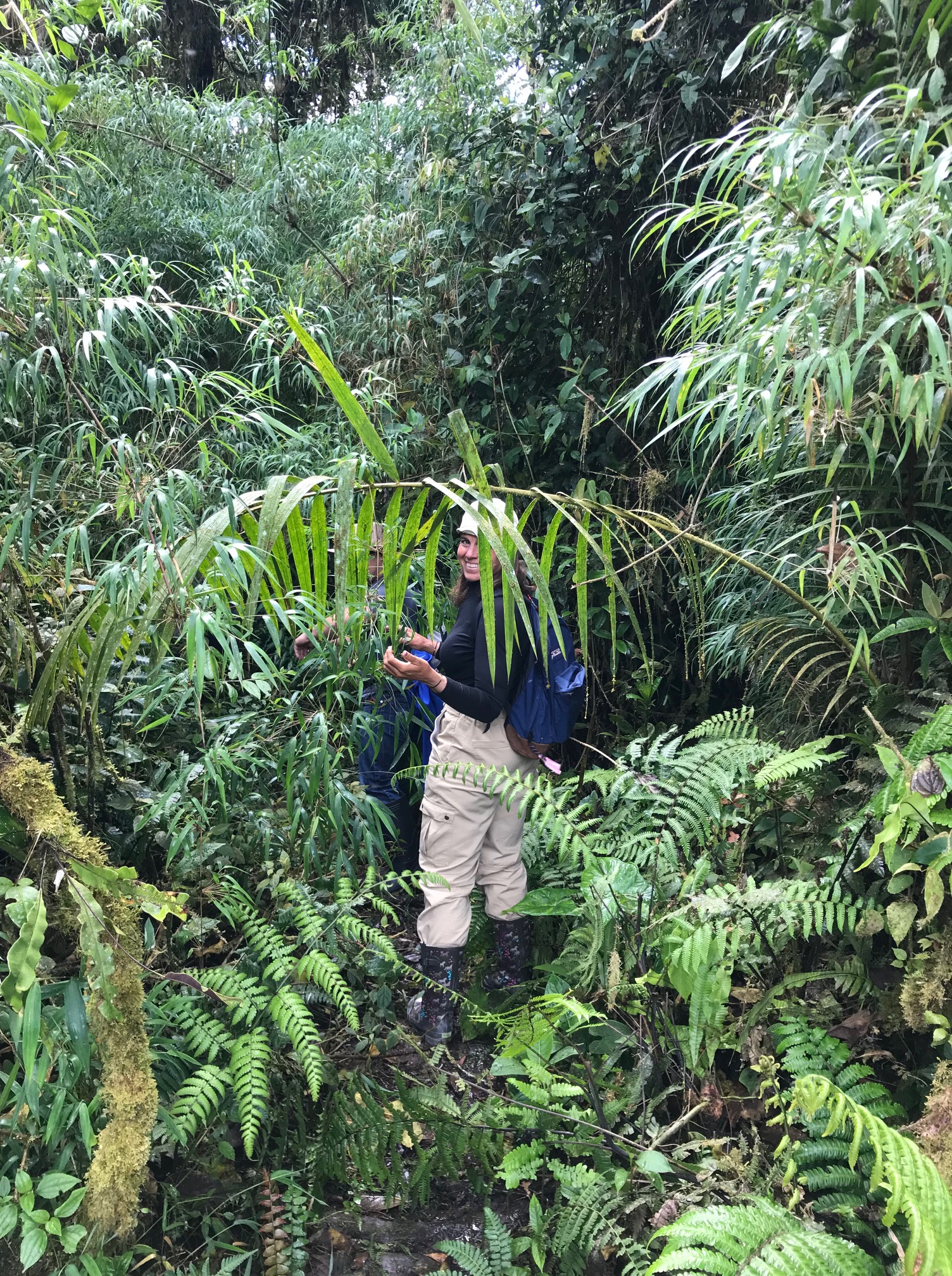
Our second jaunt out to the forest for data collection was noticeably smoother than the first. Now that we know what to look for, it’s possible to collect more data in less time. It began to rain in the afternoon while we were working, but the thick vegetation overhead protected us and gave us a soothing soundtrack to help us along.
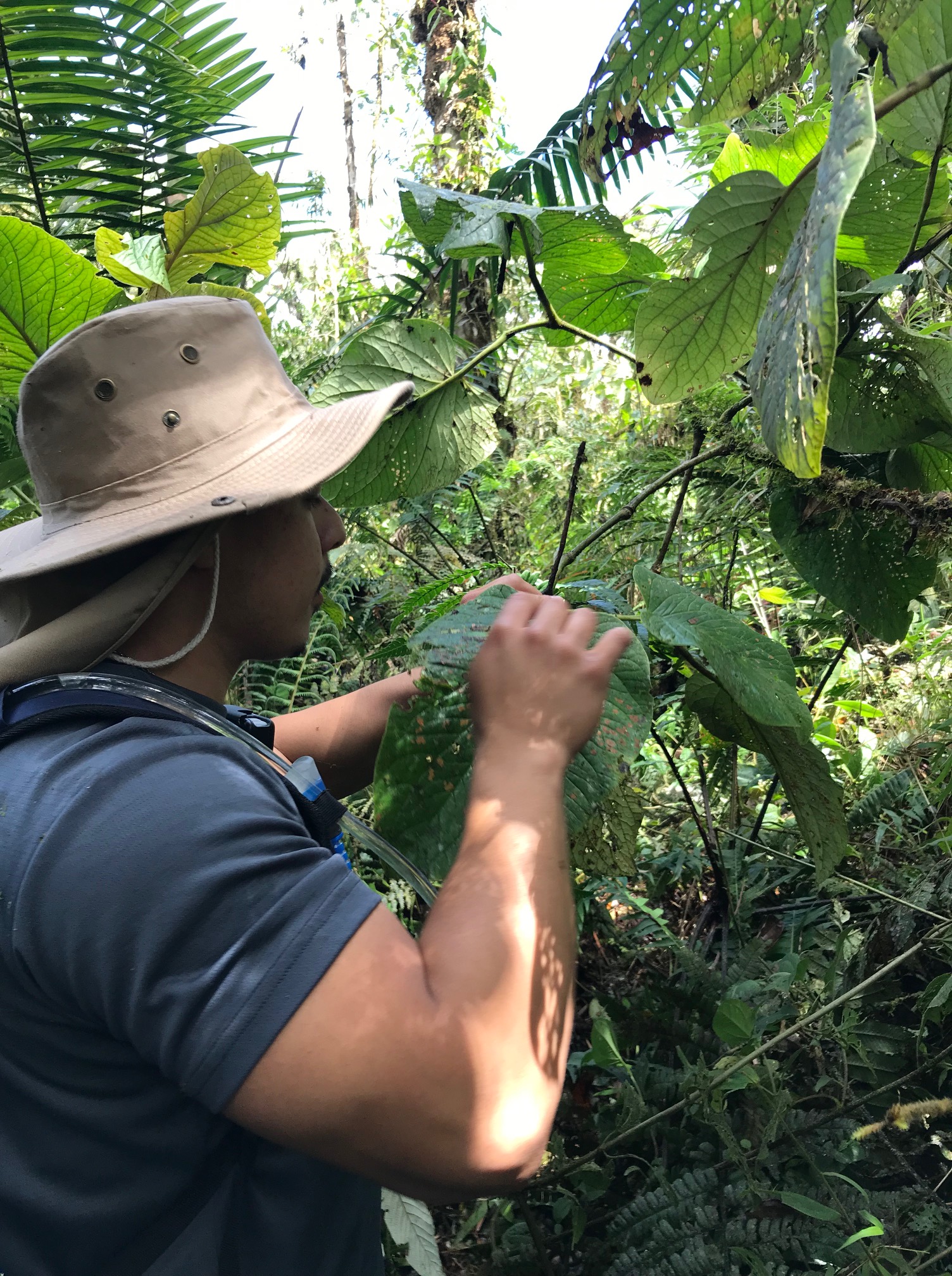
As we walked back to the Toyota, cold, muddy, and happy, Santiago asked how it felt to walk in an area where few other people have been, and it really put into perspective the enormity of this trip and how grateful I am to be a part of this important climate change research.
 Climate Change and Caterpillars in Ecuador 2019